Mold remediation is the full job. A licensed crew finds the mold, seals off the work area, removes the growth and the materials it has ruined, fixes the water problem that caused it, and proves the air is back to normal before the job is closed. If a company only scrubs what you can see and leaves, that is cleaning, not remediation.
Gainesville FL Mold Removal does mold remediation in Gainesville for homes, rentals, and businesses across Alachua County. Call us and you get a written scope and a firm price before any work begins.
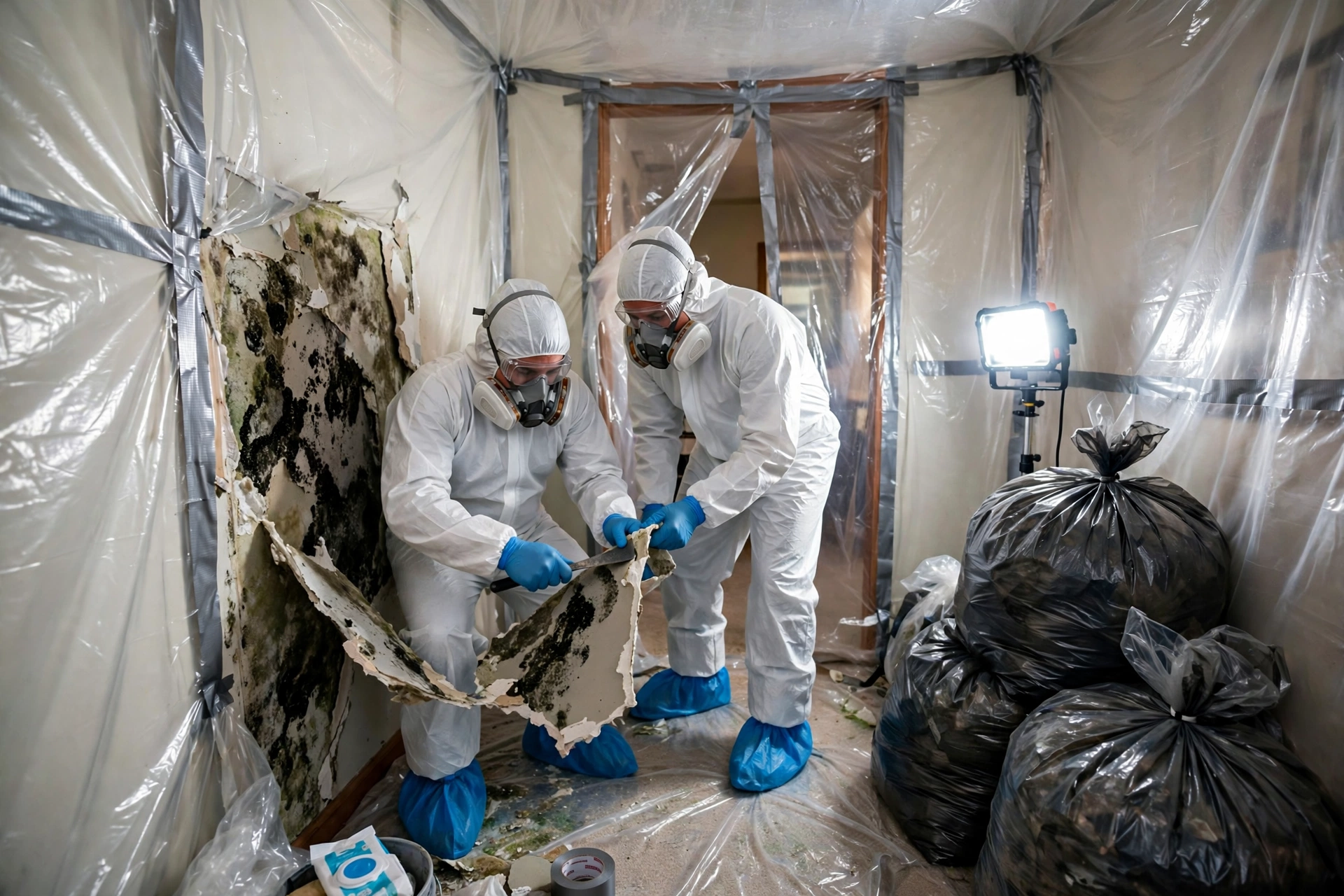
What is the difference between mold removal and mold remediation?
Removal is one step inside remediation. Removal means taking the visible growth off a surface or cutting out material that cannot be saved. Remediation is the whole plan around that step: find the source of the water, contain the area so spores do not spread, filter the air while work runs, remove what is ruined, treat what stays, dry the structure, and test at the end. The EPA makes the same point in plain terms: you cannot fix a mold problem for good unless you fix the moisture problem first. A Gainesville home with a slow AC condensate leak will grow mold again within weeks if the leak stays, no matter how clean the wall looks on day one.
How does the remediation process work, step by step?
Step 1: Licensed assessment. A Florida licensed mold assessor walks the home, checks moisture with meters, looks inside the AC closet, attic, and under sinks, and writes down where the mold is and how far it has spread. Florida law keeps this job separate from remediation, so the person who measures your problem is not the person who profits from fixing it.
Step 2: Written scope and firm price. You get the plan in writing: what comes out, what gets treated, how long it takes, and what it costs. Nothing starts until you sign off on that scope.
Step 3: Containment and air control. The crew seals the work area with plastic sheeting and runs a HEPA air scrubber under negative pressure. Spores stirred up during removal get pulled into the filter instead of drifting into clean rooms.
Step 4: Removal and treatment. Ruined drywall, insulation, and carpet come out in sealed bags. Framing and other solid materials get cleaned and treated. The moisture source gets fixed in this step too, whether that is a condensate line, a slab leak repair referral, or a roof problem.
Step 5: Drying and clearance. Dehumidifiers bring moisture levels down to normal. Then a post remediation verification checks the work, and air samples go to a lab. You get the result in writing. Normal levels mean the job is done. Anything else means we come back and finish it.
Our full process, with what you should expect on each day of a job, is on our process page.
How long does remediation take?
Most Gainesville homes take 1 to 3 days of active work. A single bathroom or AC closet is often done in a day. A job that covers several rooms, or one where walls have to open across a rental near the University of Florida, can run 4 to 7 days including drying time. Lab results for clearance samples usually come back in 1 to 2 business days. Your written scope states the expected timeline before work starts, so there are no open ended guesses.
Do I have to leave my home during remediation?
Usually not. The work area is sealed, and most families stay in the home while the crew works in one part of it. There are two common exceptions. If the AC system has to shut down in the middle of a Gainesville summer, the house gets hot fast, and a night or two elsewhere is more comfortable. And if someone in the home has severe asthma or a weak immune system, your doctor may want them out until clearance results are back. We will tell you honestly which case you are in before the job starts.
How much does remediation cost in Gainesville?
Price follows the size of the job and what has to come out. As a 2026 Florida guide, small contained jobs often run $500 to $2,000, a bathroom job $1,500 to $4,000, an AC closet and duct area job $3,000 to $8,000, and multi room or flood jobs $6,000 to $15,000 or more. The full breakdown, with worked examples and what moves a price up or down, is on our mold removal cost page. The number that matters is the firm price in your written scope, and that is fixed before we start.
When does a home need a licensed remediator in Florida?
Florida law draws the line at 10 square feet. Remediation of mold growth larger than 10 contiguous square feet is work for a licensed mold remediator under Chapter 468 of the Florida Statutes, licensed through DBPR. Below that size, a careful homeowner can often handle the cleanup, and our homepage explains where that line sits. Above it, or whenever mold is inside walls, in the AC system, or tied to a leak you cannot find, bring in a license. You can check any Florida mold licence yourself on the DBPR site, and our certifications page shows you how.
Why Gainesville homes keep growing mold
Gainesville mornings sit at 86 to 92 percent humidity for much of the year, and the city gets about 48 inches of rain a year, most of it from June through August. That air loads a home with moisture every single day. Add an AC unit that sweats into a clogged condensate line, a slab leak under a home in Millhopper, or a roof leak over an attic in Haile Plantation, and mold has everything it needs. Remediation here is not just about the patch you see. It is about the water that Gainesville keeps feeding it. That is why the moisture fix is a required step in every job we run, not an extra.
What happens if remediation is skipped or done halfway?
The patch comes back, usually wider. Mold left inside a wall cavity keeps feeding on damp drywall paper and spreads along the stud bay. The musty smell gets into closets and clothing. In a rental, the problem grows teeth: Florida landlords carry a legal duty to keep a home fit to live in, and a mold complaint handled with a coat of paint is the start of most disputes we get called into. Our landlord page covers that side in full. Half work costs more than full work, because the second crew has to redo the first crew’s shortcuts before it can start.
Ready to get the scope in writing?
Call Gainesville FL Mold Removal. We book the assessment, you get the written scope and firm price, and work starts only when you say so. If you are still deciding, start with a mold inspection and see exactly what you are dealing with.
Questions people ask us about remediation
Is remediation guaranteed to keep mold from coming back?
No honest company can promise mold will never grow again in a Florida home, because spores are in all outdoor air. What we can promise is this job ends with the growth removed, the source fixed, and lab proof that levels are normal. Keep the home dry and the same patch will not return.
Will my insurance pay for remediation?
Sometimes. Florida homeowners policies often cap mold coverage, commonly at $10,000, and usually only when the mold came from a sudden covered event like a burst pipe. Our insurance claims guide walks through what gets paid and how to document it.
Can you remediate a rental while tenants live there?
Yes, in most cases. Containment lets tenants stay in the unaffected part of the home, and we schedule loud work with the property manager. Big multi room jobs may need the unit empty for a few days, and we will say so in the scope.
Sources: US EPA, Mold (epa.gov/mold) · ANSI/IICRC S520 Standard for Professional Mold Remediation · Florida Statutes Chapter 468, Part XVI · Florida DBPR mold licensing · Florida Climate Center, Gainesville climate data