A mold inspection is a licensed check of your home that answers three questions: is mold growing here, how far has it spread, and what water problem is feeding it. You get the answers in a written report with photos and moisture readings, plus a clear next step. No guessing, and no sales talk dressed up as science.
Gainesville FL Mold Removal books inspections across Gainesville and Alachua County. Call us to set a time.
What does a mold inspection include?
A full inspection at a Gainesville home covers the rooms you are worried about and the places mold hides:
- A walk through with you first. Where have you seen spots? Where does the musty smell sit? Any leaks, AC trouble, or flooding in the last year?
- Visual check of the risk areas. Bathrooms, kitchen under sink cabinets, the AC closet and air handler, the attic, window frames, and baseboards.
- Moisture meter readings. Meters read the moisture inside drywall and flooring without cutting holes. Wet material that looks dry on the surface is the most common finding in Gainesville homes.
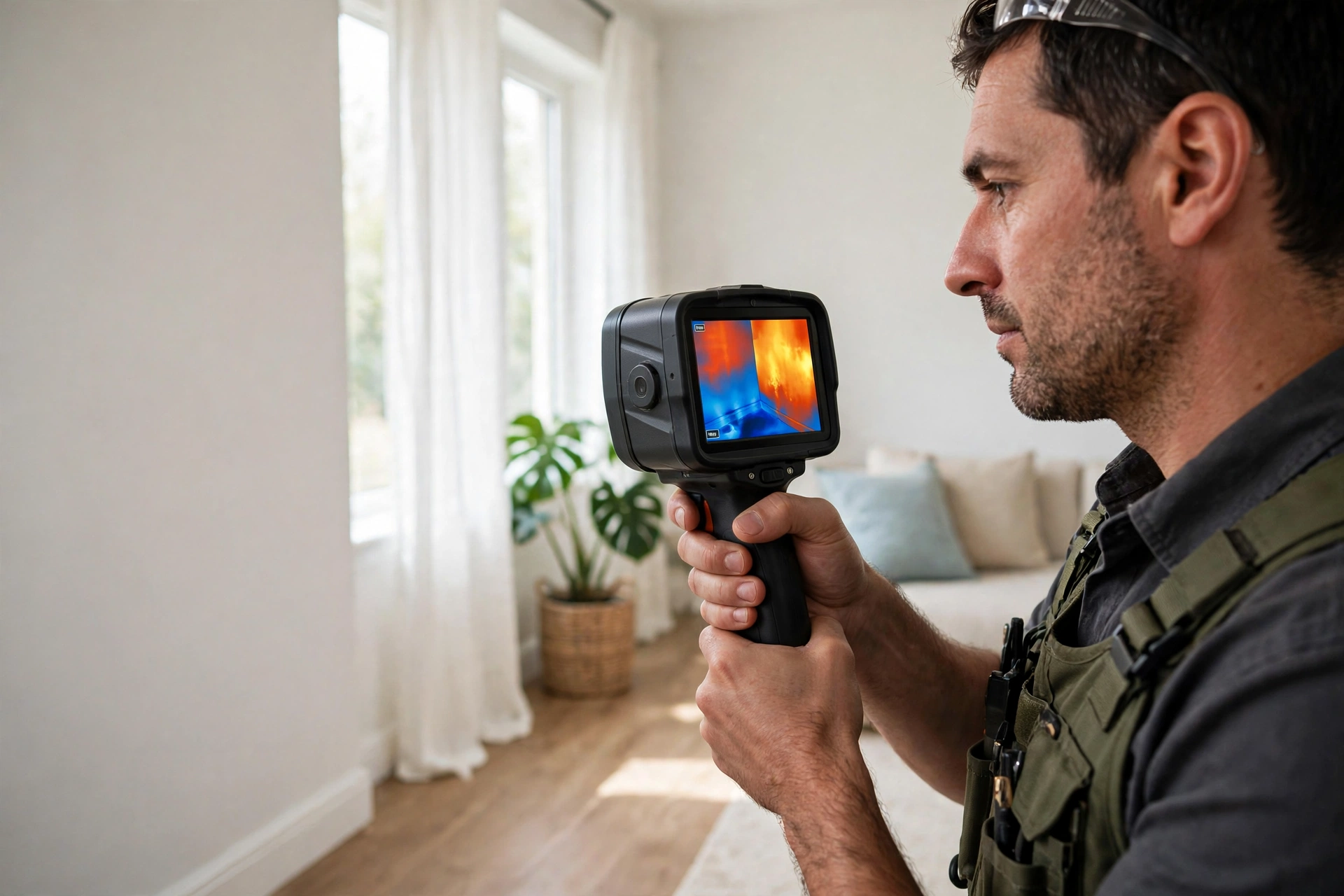
- Thermal camera scan. Temperature differences on a wall or ceiling often trace the path of a hidden leak, including slab leaks in homes around Duckpond and Pleasant Street.
- Samples when they are needed. If testing will change the decision, air or surface samples go to a lab. If the mold is plain to see, we tell you testing adds cost without adding answers, because the EPA says the same thing.
- A written report. Findings, photos, readings, the moisture source, and a recommended scope: what a remediation quote should include, and what it should not.
Who does the inspection, and why does the licence matter?
In Florida, a mold assessment for growth over 10 square feet is licensed work. The licence is called MRSA, licensed mold assessor, issued by DBPR under Chapter 468 of the Florida Statutes. Here is the part that protects you: Florida law separates assessment from remediation. The assessor who writes your report cannot turn around and sell you the cleanup on the same job. That split keeps the report honest. You can verify any assessor’s licence on the DBPR website before they ever step inside. Our certifications page shows the two minute check.
When should you book an inspection?
Book one when any of these fit:
- You smell a musty odor but cannot find the source
- A leak, flood, or AC failure got fixed, and you want to know what grew after it
- Spots keep coming back after you clean them
- Someone at home has new coughing or congestion that eases when they leave the house (bring that pattern to your doctor too, an inspection is not a medical test)
- You are buying or selling a Gainesville home and want the mold question answered before money moves
- A tenant or a landlord needs a neutral written record of the home’s condition
How much does an inspection cost in Gainesville?
As a 2026 Florida guide, a licensed inspection with testing usually runs $300 to $800, based on home size and how many lab samples are taken. The inspection alone, without samples, sits at the lower end. We quote the exact fee when you book, and the report is yours whether or not you hire us for anything else. Some companies advertise a free inspection. A free look is a sales visit, not a licensed assessment with instruments and a written report. Know which one you are getting. Full price context is on our cost page.
Inspection or testing: which one do you need?
They are partners, not rivals. The inspection is the hands and eyes work: finding growth, reading moisture, tracing the water source. Testing is lab work: air samples compared indoors and outdoors, or a surface sample that names the species. Testing without an inspection produces a lab sheet with numbers and no idea where the water is coming from. Inspection without testing is fine when the mold is visible and the decision is already clear. Our mold testing page explains samples and reports in plain words.
What happens after the inspection?
Three outcomes cover almost every home:
- No mold problem. The report says so, with the readings to back it. You paid for certainty.
- A small problem you can handle. Under about 10 square feet, on a hard surface, with the leak fixed. The report tells you how, and the EPA cleanup steps on our homepage apply.
- A problem that needs licensed remediation. The report becomes the scope for quotes. Ours comes from our own remediation team, priced firm in writing, and the process is the one on our remediation page.
Book your inspection
Call Gainesville FL Mold Removal. Tell us what you have seen or smelled, and we will set a time that fits your day. Students and landlords: we inspect occupied rentals across the University of Florida and Santa Fe College areas with the tenant’s notice handled the right way.
Questions people ask us about inspections
How long does an inspection take?
Most homes take 1 to 2 hours. Large homes, or homes with attic and crawl space access problems, take longer. Lab results, when samples are taken, usually return in 2 to 3 business days.
Do you have to cut into my walls?
No. Meters and cameras do the first pass without damage. If readings point to growth inside a wall, the report says so, and any opening happens later, inside a contained remediation job, with your written approval.
Will the inspection tell me if the mold is dangerous?
It will tell you what is growing and how much of it, once lab results are in. What it means for a person’s health is a question for a doctor. The CDC’s position is simple: all indoor mold growth should be removed, whatever the species.
Sources: US EPA, Mold Testing and Mold Course chapters (epa.gov/mold) · Florida Statutes Section 468.8419 · Florida DBPR, Mold Assessor licensing · CDC, Mold Health (cdc.gov/mold-health)