Mold testing means taking samples, air or surface, and sending them to a lab that counts spores and names species. Done at the right time, testing answers real questions: is there a hidden problem, is this rental safe to hand over, did the remediation actually work. Done at the wrong time, it produces an expensive sheet of numbers that changes nothing. This page tells you which case you are in before you pay for samples.
Gainesville FL Mold Removal offers testing as part of a licensed mold inspection across Gainesville and Alachua County. Call us.
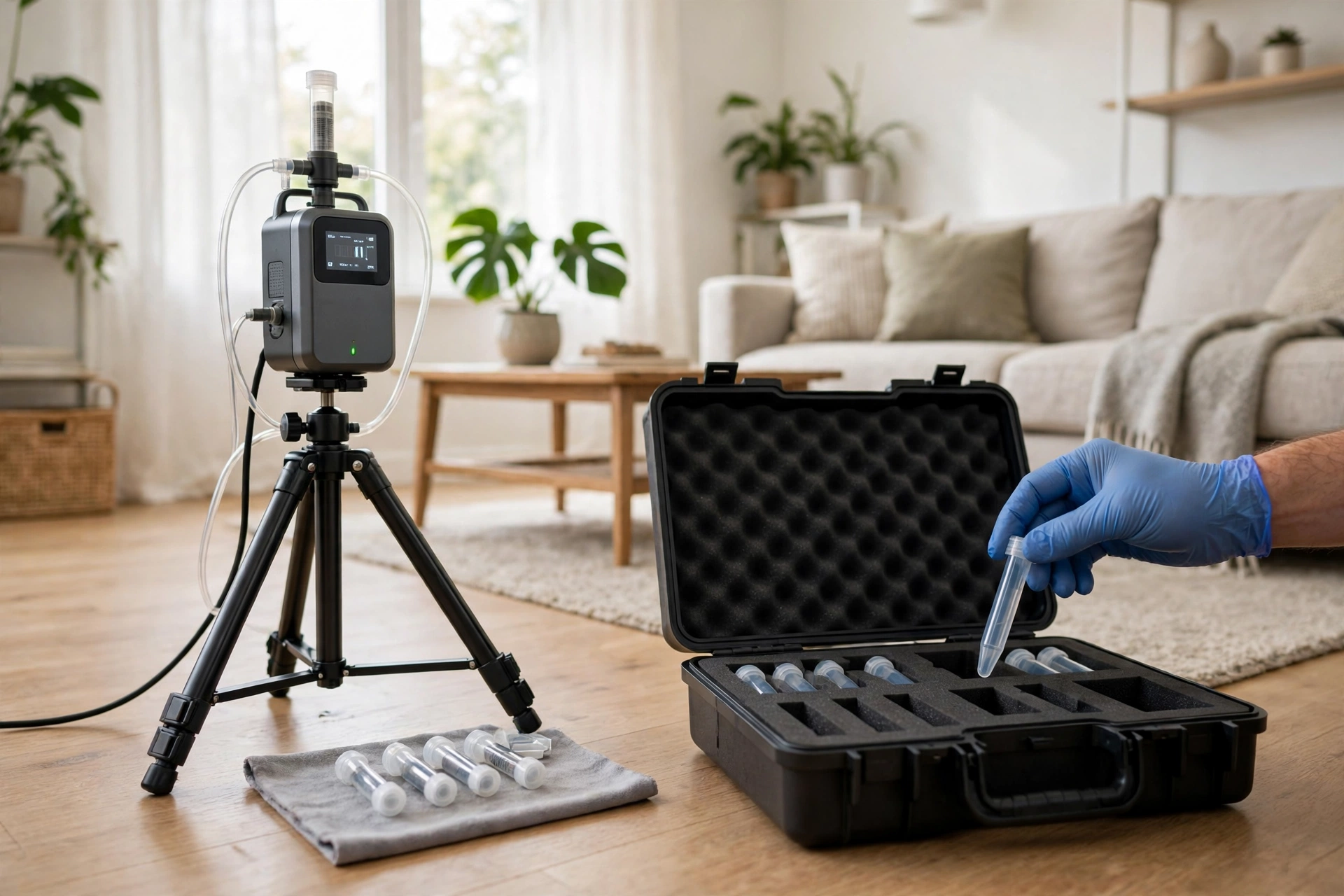
What kinds of mold tests are there?
Air samples. A pump pulls a measured amount of air through a cassette. The lab counts the spores caught and identifies the species. Samples are taken inside the home and outside it, because the comparison is the whole point: indoor air should look like outdoor air, only cleaner. A count that means nothing alone means a lot next to the outdoor baseline.
Surface samples. A tape lift or swab from a visible patch names the species growing there. Useful when you need documentation, for a dispute, a sale, or a medical file your doctor asked for.
Bulk samples. A piece of the material itself, a section of drywall or insulation, goes to the lab. Less common, used when growth inside material has to be proven.
What can testing actually tell you?
- Whether spore levels indoors are higher than outdoors, which points to growth inside the home
- Which species are present, including species tied to long term water damage
- Whether a hidden problem is likely, for example high counts in a room with no visible mold
- Whether a finished remediation brought levels back to normal (this is clearance testing, the proof at the end of a job)
What can testing not tell you?
It cannot tell you if your home is safe for you. There are no federal limits or standards for mold spore levels in homes. The EPA and the CDC both say this plainly. A lab sheet is data, not a health verdict. Health questions belong to your doctor.
It cannot find the water source. A high count tells you mold is growing somewhere. It does not tell you where the leak is. That is inspection work: meters, cameras, and eyes.
It cannot name the room by itself. Air moves. A sample taken in a hallway can catch spores from a bathroom. Samples support an inspection, they do not replace one.
When do you not need testing?
When you can see the mold. The EPA’s guidance is direct: if mold growth is visible, sampling is usually unnecessary, because the fix is the same whatever the species: remove the growth and fix the moisture. Homeowners pay for tests every week in Gainesville that change no decision at all. We will tell you when that is your case, and we lose the sale gladly, because the remediation decision was already clear.
When is testing the right call?
- You smell mold but cannot see it. High indoor counts justify opening a wall. Low counts send the hunt elsewhere.
- A home sale is in motion. Buyer, seller, and lender all work from the same lab sheet instead of arguing about a smell.
- A landlord and tenant disagree. A licensed assessor’s samples are a neutral record in a Florida rental dispute. See our landlord page.
- After remediation. Clearance testing is the proof the job worked, and the document your insurer or buyer will ask for later.
- A doctor asked. Some physicians want species information for a patient with ongoing symptoms. Bring us the request and the samples will match it.
How much does testing cost in Gainesville?
As a 2026 Florida guide, testing rides inside a licensed inspection at $300 to $800 total, based on the number of samples. Clearance testing after a remediation job runs $300 to $700. The fee is quoted when you book, and the lab report is yours to keep and share. Details sit on our cost page.
Who is allowed to test for mold in Florida?
For growth over 10 square feet, assessment is licensed work in Florida: a DBPR licensed mold assessor, MRSA, under Chapter 468 of the Florida Statutes. The law also separates the assessor from the remediator on the same job, so the person reading your lab results has no reason to inflate them. Verify any licence on the DBPR site before you book; our certifications page shows how.
Book testing that answers a real question
Call Gainesville FL Mold Removal. Tell us the decision you are trying to make, and we will tell you honestly whether samples will help you make it.
Questions people ask us about testing
Are home test kits from the store worth it?
They grow mold from almost every home, because spores are in all air, and they come with no outdoor comparison and no inspection. A petri dish that turns fuzzy tells you your house has air in it. Licensed sampling exists because the comparison and the context are the answer.
How long do lab results take?
Usually 2 to 3 business days. Clearance results on an active job can often be rushed to 1 to 2 days so a home is not held up.
If my counts are high, do I have to remediate?
High counts plus a found moisture source mean growth is active indoors, and the CDC’s advice is that indoor mold growth should be removed. The inspection report will show you the size of the problem in plain terms before you decide anything.
Sources: US EPA, Mold Testing and Mold Course (epa.gov/mold) · CDC, Mold Health and Testing statements (cdc.gov/mold-health) · Florida Statutes Section 468.8419 · Florida DBPR mold assessor licensing